Rates have pulled back from their spring highs, home prices in Central Florida are showing modest gains again, and the data on underwater mortgages is stabilizing rather than getting worse. But the most useful takeaway from this month’s numbers might be the simplest one: right now, the quality of your renovation work matters more than how flashy the design is.
Rates have eased, but not by much
Rates started 2026 around 6.15%, then climbed as the Iran conflict and a run of strong jobs reports pushed the Federal Reserve to shift its tone from possible rate cuts to talk of two or three increases. Since then, the conflict has settled and some of those employment figures were revised, so talk of hikes has cooled and rates have retreated slightly.
As of July 1, the average 30 year conventional rate sits at 6.58%. The 15 year is running close behind at roughly 6.25% to 6.44%, and the 30 year FHA is at 6.3%. At the height of the Iran related spike, rates touched 6.8%. Oil prices have since dropped from over $100 a barrel to under $70, but strong economic data is keeping the Fed cautious about cutting too soon. For now, the range to watch is 6.3% to 6.75%. Rates at 6.65% and below tend to keep pending sales and closings healthy. Hopes of a return to 5% mortgages have largely faded for the time being.
What June’s local numbers show
The Orlando Regional Realtor Association’s June 2026 residential data, covering Orange, Osceola, Lake, Seminole, and Volusia counties and excluding condos, shows a market holding steady compared to June 2025:
- New listings are up slightly
- Closings are up 8% to 9%
- Average price is up about 5%
- Median price is up 2.3%, a welcome return to positive territory after a slight dip earlier in the year
- Days on market, days to contract, and days to sale are all roughly flat
- Short sales and foreclosures rose to 8 in June, up from 1 the prior year, a large percentage jump on a very small base
One thing worth flagging: ORRA appears to have expanded its underlying data set, and the reported median price jumped from around $385,000 in prior months to $452,000. That’s a meaningful shift for how you benchmark a listing. A property priced around $450,000 is now sitting right at the local median, while something listed closer to $370,000 is well below it, which affects both your renovation scope and the features worth prioritizing.
Negative equity is stabilizing, not worsening
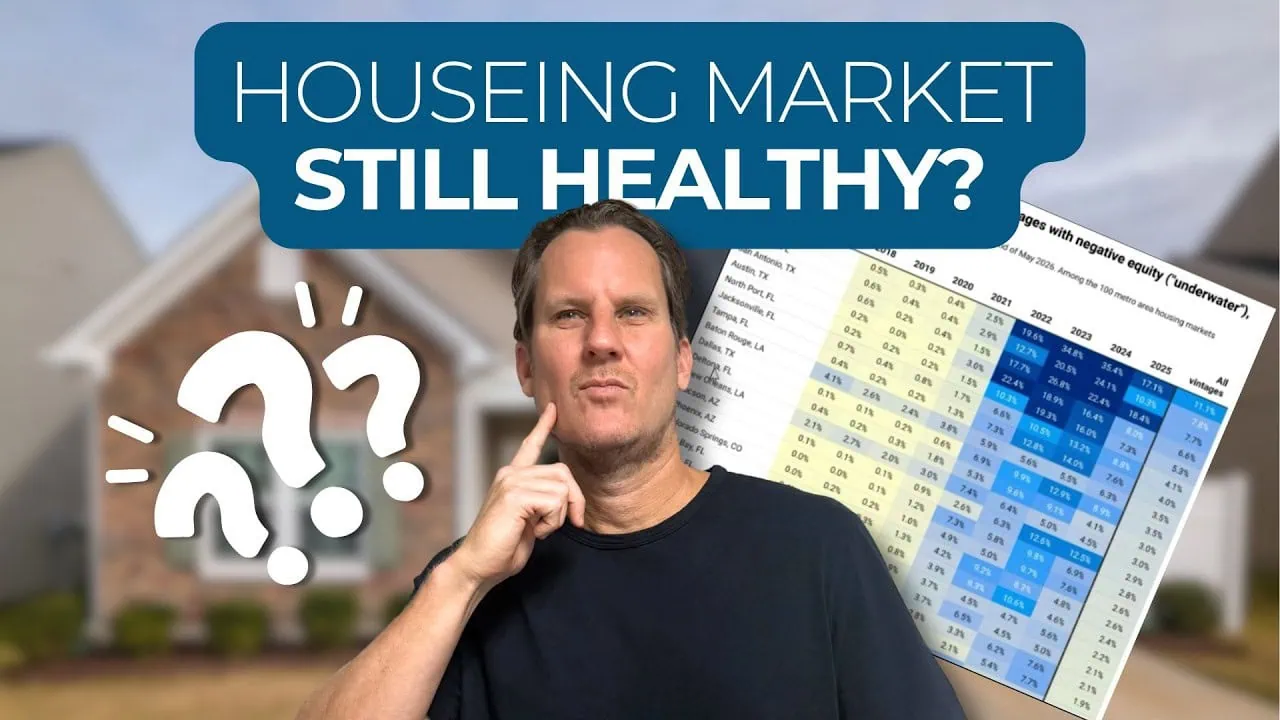
Florida and Texas metros show up prominently on national lists tracking the share of mortgages with negative equity, and that headline can sound alarming. But the trend line matters more than the label. In Central Florida, negative equity was minimal from 2018 through 2021, climbed to a peak of about 10.6% in 2024, and has since eased to somewhere in the 4.6% to 6% range in 2025.
The mortgages most likely to be underwater are the ones originated in 2022, at the peak of pricing, and that shows up in markets like Deltona, Orlando, Palm Bay, Tampa, and Lakeland. Worth remembering: prices in those markets had risen roughly 50% from pre pandemic levels, so some pullback from that peak isn’t unexpected. The bigger signal is that pricing appears to be stabilizing, which should give investors more confidence that an after repair value estimate today will still hold by the time a renovation wraps.
Where the demand actually is
On the ground, demand looks strongest at $500,000 and up. It’s noticeably lighter in the $350,000 to $400,000 range and below, which may reflect tighter credit and affordability pressure on buyers at that price point. That’s a useful data point when you’re deciding where to position your next project.
The real differentiator right now: quality over design
With more competition in the market, craftsmanship is doing more work than design trends. A flip with a basic layout but excellent execution will outperform one with a striking design and sloppy work, because buyers notice the details. Crooked light switches, gaps around the front door, poor weather stripping, a lock that wasn’t installed properly, these are the first things a buyer touches, and they signal corner cutting instantly. Once a buyer clocks that, they move on to the next listing.
The upside: a property with solid design, good flow, and genuinely high quality work can still get multiple offers and go under contract within a week, regardless of what the average days on market number suggests. There are still buyers actively looking for a well built home.
The outlook
We continue to see the Central Florida market as healthy, with real contract activity and closings happening on the ground. There’s reason to expect some buyers who stepped back due to broader concerns, including immigration enforcement activity, to return to the market later in the year. We’ll be covering the impact of that enforcement activity on rental rates and pricing, based on recent Federal Reserve research, in an upcoming segment.
If you need financing, market data, or even a second set of eyes on a struggling project, Capital Fundings is built to be a partner, not just a lender. We currently have about $10 million available to lend. Reach out through capfund.com and let’s get your next project moving, and profitable.